


Bitcoin reserves on Binance dropped by nearly 40,000 coins starting September 20, marking the largest wave of exchange withdrawals since mid-2023. On-chain analytics indicate that major market participants are pulling assets into private storage while simultaneously depositing stablecoins back into trading venues.
This massive shift in exchange balances signals a potential supply crunch as spot buyers absorb available liquidity during an extended period of price consolidation. Analysts and traders are closely monitoring these reserve fluctuations to determine if the outflow trend will trigger a decisive breakout above stubborn overhead resistance levels.
- Binance recorded weekly net outflows of 23,137 BTC through September 27, the highest rate since June 2023.
- Total exchange reserves fell by nearly 40,000 coins since September 20 as large entities accumulated spot assets.
- Simultaneous stablecoin inflows suggest whales are positioning fresh capital to execute aggressive spot purchases.
Market Reaction
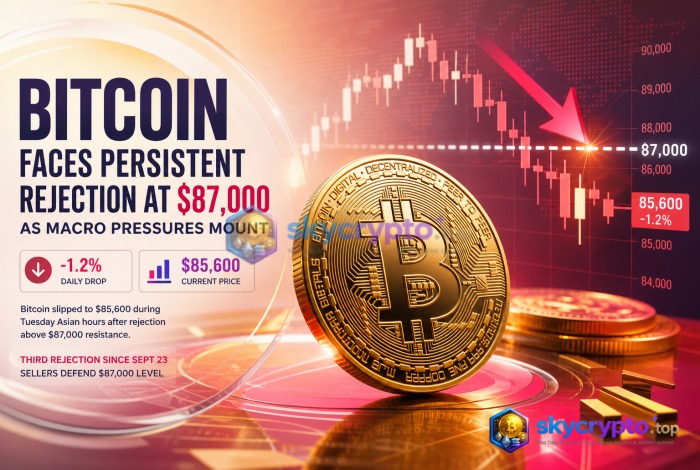
Price action across the broader digital asset market remained remarkably contained despite the heavy outflow volumes exiting the order books. Bitcoin traded within a tight band between $82,500 and $87,400, reflecting persistent selling pressure and thick walls of liquidity capping upside momentum. Traders on perpetual swap platforms registered mixed sentiment, as funding rates drifted near neutral while spot buyers slowly absorbed the floating supply.
Order book depth charts reveal aggressive limit selling clustered just below the $87,570 mark, frustrating short-term momentum traders. Yet, the absence of aggressive downside follow-through during withdrawal surges indicates that sellers are losing conviction. Market makers report that spot premiums on primary venues have held steady, suggesting organic retail and institutional demand is quietly matching the aggressive whale accumulation occurring behind the scenes.
Derivatives markets show subdued open interest relative to the heavy volume moving off-chain, implying that spot accumulation drives the current market structure rather than speculative leverage. This dynamic typically reduces systemic liquidation risk, creating a cleaner foundation for a sustained directional move. Market participants note that historical precedents of heavy exchange withdrawals often precede sharp volatility spikes once order book liquidity thins out completely.
Why This Happened
The primary catalyst behind the withdrawal wave stems from large-volume entities positioning themselves for a fourth-quarter supply squeeze. On-chain metrics track a sustained rotation of capital over the past six weeks, with whales returning stablecoin supplies to exchange wallets even as they pull native Bitcoin out. This dual-action strategy points to deliberate preparation for aggressive spot deployment rather than panic selling or passive holding.
Macroeconomic crosswinds also play a crucial role in shaping current trader behavior. Persistent uncertainty surrounding central bank monetary policies and fiat currency debasement has reinforced the appeal of decentralized assets as a long-term store of value. Institutional allocators increasingly treat exchange reserves as a primary barometer of available circulating supply, making large-scale withdrawals a favored metric for gauging true conviction among deep-pocketed investors.
Furthermore, diminishing miner reserves following the recent block reward halving have restricted the influx of fresh primary supply into the open market. When combined with substantial exchange withdrawals, the net effect is a rapidly contracting pool of liquid Bitcoin available for immediate purchase. This structural supply deficit forces buyers to compete for a dwindling share of order book depth, laying the groundwork for accelerated price appreciation once resistance barriers break.
Institutional and Whale Activity
Large-volume wallets controlling upwards of 1,000 coins have spearheaded the recent withdrawal trend, systematically moving assets away from trading venues into cold storage solutions. Historical data consistently demonstrates that prolonged accumulation phases by these cohort classes coincide with major market bottoms or mid-cycle consolidation ranges. The magnitude of the recent outflows surpasses typical seasonal averages, pointing to coordinated positioning by well-capitalized market participants.
On-chain transfer velocity metrics confirm that the coins leaving exchange infrastructure are entering dormant addresses rather than moving to alternative trading venues for immediate deployment. This dormancy surge indicates long-term conviction rather than short-term tactical arbitrage. Meanwhile, stablecoin balances on Binance have grown steadily, providing the dry powder necessary for these same whale entities to absorb sudden bouts of localized selling pressure.
Derivatives data complements the on-chain story by showing restrained leverage expansion among institutional desks. Futures basis remains healthy without reaching the frothy extremes that typically precede sharp market corrections. This measured approach suggests that professional market participants are relying on spot accumulation and delta-neutral strategies rather than taking on unhedged directional risk in an uncertain macro climate.
Historical Context
The current outflow profile bears a striking resemblance to the market dynamics observed in June 2023. During that period, Binance registered a weekly net outflow of 44,942 coins, which preceded a powerful rally that pushed the price from $26,300 to $30,500 over subsequent weekly candles. That historical episode marked a definitive turning point as the market emerged from the protracted shadows of the 2022 bear cycle.
Comparing the scale of the current 40,000-coin withdrawal to prior bull market consolidation phases reveals a consistent playbook utilized by smart money participants. Whales routinely leverage range-bound price action to accumulate inventory invisibly while retail attention wanes. Once exchange liquidity drops below critical thresholds, even modest buy orders can trigger rapid upward repricing due to the thinness of the order book.
Market historians emphasize that prolonged consolidation ranges coupled with aggressive exchange outflows almost invariably resolve in the direction of the net withdrawals. While past performance does not guarantee future results, the structural parallels between the mid-2023 recovery and current on-chain readings provide a compelling framework for assessing the probability of an impending breakout.
What Traders Are Watching
- $87,570 Resistance Level: The primary yearly open and overhead liquidity wall that currently caps immediate upside price expansion.
- $82,500 Support Floor: The lower boundary of the current multi-week consolidation range holding firm against seller pressure.
- Exchange Reserve Metrics: Daily and weekly netflow data from primary trading venues to confirm whether whale accumulation persists.
- Stablecoin Balance Inflows: Tracking total stablecoin reserves on major platforms to gauge available dry powder for spot purchases.
- Perpetual Futures Open Interest: Monitoring leverage expansion to ensure the market remains driven by spot demand rather than speculative excess.
Disclaimer: This article is provided for informational and educational purposes only and does not constitute financial, investment, or trading advice. Digital assets carry significant market risk.









Comments
You must be logged in to post a comment.
Login or Register