

Understanding Bitcoin Spot ETFs and Their Flow
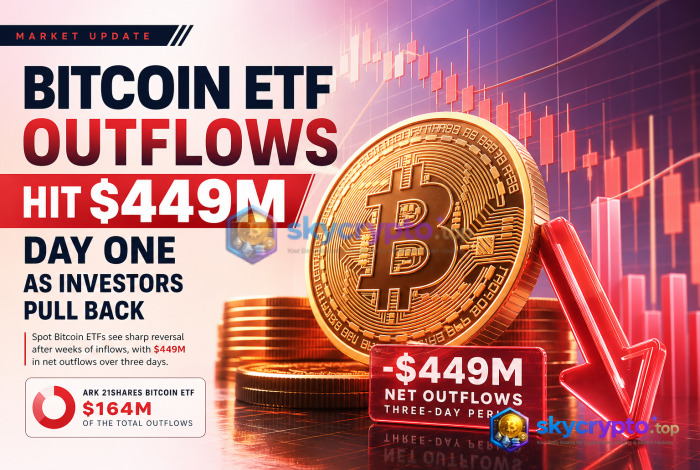
A Bitcoin spot Exchange‑Traded Fund (ETF) is a financial product that tracks the price of Bitcoin directly, just like a traditional stock that tracks a company’s value. Investors can buy shares of the ETF on a stock exchange, and each share is meant to represent a specific amount of Bitcoin. When large numbers of investors purchase these shares, the ETF buys Bitcoin from the market, creating an inflow of capital into Bitcoin. Conversely, when investors sell their ETF shares, the fund sells Bitcoin, resulting in an outflow of capital. In August, spot Bitcoin ETFs have experienced inflows of $754 million during the first week, indicating that institutional and retail investors have been adding money to Bitcoin through these convenient, regulated vehicles.
Spot ETFs are important because they provide a bridge between traditional finance and cryptocurrency. They allow people who are comfortable with stock market platforms to gain exposure to Bitcoin without needing a cryptocurrency exchange. The inflows we see suggest that many investors believe Bitcoin’s price may rise, or they simply want to diversify their portfolios. However, inflows alone do not guarantee that the price will move dramatically; other factors, such as market sentiment, options activity, and upcoming economic data, also play crucial roles.
Bitcoin’s Current Price Stability and What It Means
As of the latest data, Bitcoin is trading around $64,700. This price level reflects a balance between buyers and sellers at the moment. When many investors see the price staying steady, they may interpret this as a sign of confidence, but it can also indicate that there is limited conviction in either direction. A stable price does not mean the market is risk‑free; it simply means that the forces pushing the price up and down are roughly equal at this point in time.
To understand why Bitcoin might remain stable, consider a simple analogy: imagine a crowd of people standing on a balance scale. If everyone steps back at the same time, the scale remains level, even though many people are moving. In the same way, many market participants may be holding back, waiting for clearer signals before making large bets.
Options Market: Calls, Puts, and Market Sentiment
What Are Options?
An options contract gives the holder the right, but not the obligation, to buy (a call option) or sell (a put option) an asset at a predetermined price before a specific date. Options are like buying insurance: you pay a premium for the right to protect yourself against unfavorable price movements. If you think Bitcoin’s price will go up, you might buy a call option; if you think it will go down, you might buy a put option.
The options market adds depth to the Bitcoin ecosystem. It allows traders to hedge risk, speculate on price changes, and express expectations without having to own the actual Bitcoin. The volume of options activity can reveal whether the market is leaning bullish (calls) or bearish (puts).
Recent Options Activity
Over the past 24 hours, put options accounted for 53.8 % of Bitcoin options volume. This means that more than half of the options trades were bets that Bitcoin would fall. Three of the four most‑traded contracts were puts with strike prices at $62,000 and $63,000, expiring on August 10, August 14, and August 28. These contracts suggest that some traders are preparing for a possible dip, perhaps ahead of the upcoming U.S. jobs report.
Despite the strong put activity, calls still represent 60.7 % of total open interest. Open interest measures the number of outstanding contracts that have not been settled. A high call open interest indicates that many traders have taken bullish positions and are still holding them. The mix of high put volume and high call open interest shows a market that is both preparing for downside risk and maintaining optimism about future price increases.
Volatility Index (DVOL) and Implied Volatility
Deribit’s DVOL index measures Bitcoin’s expected 30‑day volatility. Volatility is a gauge of how much the price is expected to swing up or down. A higher DVOL means the market expects large price movements, while a lower DVOL suggests that traders expect relative calm.
Currently, DVOL sits near 35, down from a peak of 90 earlier this year. This decline indicates that traders anticipate less dramatic price changes in the near future. Think of DVOL as a weather forecast: if the forecast says "sunny" (low volatility), people are less likely to buy raincoats (hedging instruments). When DVOL falls, protection through options becomes cheaper, as reflected in the lower premiums for puts and calls.
Luke Deans, senior research associate at Bitwise, notes that this compression of volatility spans multiple time frames—30‑day, 60‑day, and 90‑day ranges, as well as from one‑week to three‑month options. The fact that volatility is low across these periods suggests that the market consensus is that Bitcoin will experience relatively stable price action for the coming months.
Market Crowding and the “Very Little Will Happen†Expectation
When many participants adopt the same view, the market can become crowded around that expectation. Deans describes the current situation as the market becoming crowded around the belief that very little will happen. In such an environment, traders may reduce hedging activity because they think the risk is low. This can create a feedback loop: low volatility leads to less demand for protection, which keeps volatility low, reinforcing the belief that little movement will occur.
However, a crowded trade can be fragile. If new information contradicts the prevailing view, the market may react sharply. For example, stronger-than‑expected U.S. jobs data could cause investors to rethink their assumptions, leading to rapid buying or selling that disrupts the calm.
The Role of U.S. Jobs Data in Shaping Market Sentiment
Macroeconomic indicators, particularly the U.S. employment report, are closely watched by investors because they influence expectations about monetary policy. Economists anticipate that July’s payrolls increased by roughly 97,500 jobs, following a 57,000 gain in June. The unemployment rate is expected to remain at 4.2 %.
A strong jobs report typically lifts bond yields, which can lead to higher interest rates and a more restrictive financial environment. In such a scenario, investors might rotate out of risky assets like Bitcoin and into safer securities, potentially driving Bitcoin’s price down. Conversely, a weaker-than‑expected report could lower bond yields, rekindle concerns about economic growth, and also create uncertainty, which may cause Bitcoin’s price to fluctuate.
The market’s positioning ahead of the jobs report reflects this uncertainty. Traders have bought put options at $62,000 and $63,000, suggesting they are hedging against a possible dip if the data disappoints. At the same time, the overall options market remains tilted toward calls, indicating that many still expect Bitcoin to remain strong or even rise.
Liquidity Risks and the Impact of Thin Participation
Deans highlights that thin participation and market illiquidity can create fragile conditions. When there are few buyers and sellers actively trading, even modest changes in supply or demand can cause outsized price moves. This is similar to trying to move a heavy box with only a few people: a small push can cause the box to lurch unexpectedly.
In a thin market, large institutional orders can dominate price action, and small retail trades may have a disproportionate impact. This can amplify volatility when sentiment shifts. The current low‑volatility environment may mask these underlying liquidity concerns, making the market appear calm while actually being vulnerable to sudden swings.
It is essential for investors to recognize that Bitcoin’s lack of movement should not be mistaken for an absence of risk. The risk is not just price volatility but also the risk of liquidity shortages, sudden shifts in market sentiment, and the potential for rapid price adjustments when new information emerges.
Zcash Tachyon Upgrade: Scaling Shielded Payments and Preparing for the Future
What Is the Tachyon Upgrade?
Zcash is a privacy‑focused cryptocurrency that allows users to make shielded transactions—meaning the details of the transaction remain hidden from prying eyes. The Tachyon upgrade is a significant development aimed at improving the network’s performance and security. It includes three primary objectives: scaling shielded payments, enhancing quantum readiness, and testing the robustness of Zcash’s funding, security, and governance frameworks.
Scaling shielded payments means making it possible to handle a higher volume of private transactions without slowing down the network. This is achieved through technical improvements such as more efficient cryptographic methods and better block propagation. As more users adopt privacy‑preserving tools, the ability to process these transactions quickly becomes crucial for maintaining usability.
Quantum Readiness: Preparing for Future Computing
Quantum computing is an emerging technology that could potentially break many of the cryptographic algorithms currently used in cryptocurrencies. Zcash’s Tachyon upgrade includes updates to its cryptographic protocols to be more resilient against quantum attacks. This involves adopting post‑quantum cryptographic techniques that are designed to remain secure even when powerful quantum computers become widely available. By addressing this future threat now, Zcash aims to protect users’ privacy and assets over the long term.
Testing Funding, Security, and Governance
Any blockchain upgrade is essentially a large‑scale experiment. Tachyon serves as a test bed for Zcash’s ability to manage its financial resources, security mechanisms, and decision‑making processes. The upgrade introduces new budget allocation methods, revised security parameters, and updated governance proposals. Developers and stakeholders can observe how the network responds to these changes, gathering data that will inform future improvements.
These tests are valuable because they reveal potential weaknesses before they can be exploited. For instance, if the upgrade causes a temporary dip in transaction speed, the community can analyze the cause and adjust the protocol accordingly. Similarly, governance changes can show how the network balances the interests of developers, miners, and users.
Why the Tachyon Upgrade Matters
The significance of Tachyon extends beyond Zcash’s technical landscape. Privacy coins like Zcash offer an alternative to transparent cryptocurrencies, providing users with the option to keep their financial activity confidential. As regulatory scrutiny of digital assets increases, tools that enable private transactions become more important for individuals who value financial privacy.
Moreover, Zcash’s focus on quantum readiness signals a proactive approach to security. Many other cryptocurrencies are still assessing how they will adapt to quantum threats. By implementing post‑quantum cryptography now, Zcash sets a benchmark for the industry and encourages other projects to prioritize long‑term security.
Finally, the upgrade’s role as a living laboratory for funding, security, and governance provides insights that can benefit the broader blockchain community. Lessons learned from Tachyon’s performance can be applied to other networks seeking to improve their own upgrade processes.
Synthesizing the Information: What Investors Should Keep in Mind
The current market environment reflects a blend of optimism and caution. Spot Bitcoin ETFs are pulling in capital, indicating ongoing institutional interest. However, the significant put activity in the options market suggests that traders are hedging against potential downside, especially around the upcoming U.S. jobs report. The low DVOL index implies that the market expects limited price swings, but this calm can be deceptive. Thin liquidity and crowded trades can amplify price movements when unexpected events occur.
For anyone involved in Bitcoin or privacy‑focused assets like Zcash, understanding these dynamics is crucial. Monitoring ETF flows, options positioning, volatility measures, and macroeconomic data provides a comprehensive view of market sentiment. Meanwhile, upgrades such as Zcash’s Tachyon demonstrate how the cryptocurrency ecosystem continues to evolve, addressing scalability, privacy, and future security challenges.
Conclusion: Stay Informed and Vigilant
The cryptocurrency landscape is constantly shifting. While Bitcoin’s price may appear steady, the underlying factors—such as ETF inflows, options market behavior, and upcoming economic data—create a complex picture of risk and opportunity. Similarly, projects like Zcash are pushing the boundaries of what digital assets can achieve, focusing on privacy, quantum resilience, and robust governance.
Investors and enthusiasts should remain alert to these developments. Understanding the mechanisms that drive market movements, the role of hedging instruments, and the implications of technological upgrades empowers individuals to make more informed decisions. In a space where information is power, staying well‑versed in both the technical and market‑driven aspects of cryptocurrencies is the best strategy for navigating the future.


Comments
You must be logged in to post a comment.
Login or Register