

Understanding the Foundations of Blockchain Security
Before diving into the newest threats, it helps to picture what makes a blockchain network secure in the first place. Think of a blockchain as a digital ledger that is duplicated across many computers, called nodes. Each entry in the ledger is linked to the previous one, forming a chain. This design ensures that altering a single record would require changing every later record on every node—a practically impossible task if the network is large enough.
At the heart of this system are cryptographic keys. A public key works like a bank account number: anyone can use it to send money to you, but it does not reveal your private key. The private key is the secret password that lets you authorize transactions, similar to the PIN that lets you withdraw cash from an ATM. If an attacker obtains that PIN, they can move money without the owner’s consent.
Smart contracts are self‑executing programs stored on the blockchain. They run automatically when predefined conditions are met, much like a vending machine that releases a soda only after you insert the correct amount. While smart contracts are powerful, they are only one part of the security equation. The network also depends on the people who interact with it, the software they use, and the procedures that protect their credentials.
Traditional online services—often called Web2—already grapple with threats such as phishing, credential leaks, and account takeovers. In the crypto world, known as Web3, these familiar problems intersect with unique features like immutable ledgers and decentralized governance. As a result, security professionals must address both the everyday risks that affect any online platform and the novel challenges that arise from the technology itself.
The Shift from Code Flaws to Human‑Centric Attacks
Over the past few months, the most damaging incidents in the crypto space have not stemmed from buggy smart contracts. Instead, they have been driven by more sophisticated tactics, including fabricated identities and AI‑generated scams. These attacks exploit the gap between the technology and the people who use it.
Imagine a thief who copies a company’s logo, creates a fake website, and then pretends to be a trusted partner. A victim, believing they are dealing with a legitimate entity, might hand over their private key or sign a transaction that sends funds to the thief’s address. This type of social engineering is as old as fraud itself, but AI tools now make it far easier to produce convincing deepfakes, synthetic voices, and tailored messages at scale.
Michael Coates, the Chief Information Security Officer (CISO) at the Solana Foundation, points out that attackers are motivated because crypto assets can be taken irrevocably. Unlike a traditional bank that may reverse a fraudulent transaction, a blockchain transaction, once confirmed, is essentially irreversible. This permanence raises the stakes and encourages adversaries to look for any possible weakness, even those that seem ordinary in other contexts.
Coates’ background includes leading security at Twitter and Mozilla during the browser wars, giving him a unique perspective on how security evolves as technology matures. In his current role, he not only safeguards the foundation’s internal systems but also works with projects built on Solana’s network to embed robust security practices early in development.
Why Operational Security Matters More Than Ever
Operational security (op‑sec) refers to the day‑to‑day practices that protect data, credentials, and access points. In the crypto arena, op‑sec failures often start with a compromised email account, a reused password, or a careless click on a malicious link. Once an attacker gains access to a user’s email, they can reset passwords for crypto exchanges, steal recovery codes, or impersonate the victim in communications.
Consider a scenario where a trader receives an email that looks like a notification from their exchange. The email asks them to verify their account by clicking a link that leads to a fake login page. The victim, unaware of the deception, enters their username and password. The attacker now has the credentials and can withdraw funds or transfer assets to another wallet. This chain of events illustrates how a single weak point—phishing—can cascade into a full‑scale theft, even if the underlying blockchain protocol remains sound.
Coates emphasizes that many high‑profile hacks are rooted in these “Web2‑style†issues rather than in clever code exploits. The lesson is clear: strengthening the human and procedural layers is as critical as hardening the smart contracts themselves.
Fake Identities and Deepfake Social Engineering
The rise of artificial intelligence has dramatically amplified the effectiveness of social engineering. AI can generate realistic images, audio, and video that mimic real people. Attackers can now create a deepfake video of a CEO approving a large transaction, or a voice‑clone of a trusted friend asking for help transferring money.
These AI‑generated scams are not science fiction. In one recent incident, a crypto firm’s CFO received a video call from what appeared to be the company’s CEO, requesting an urgent wire transfer to a new vendor. The CFO, trusting the visual evidence, complied. The transfer was irreversible, and the funds vanished into a wallet controlled by the fraudster. The deepfake was so convincing that even the firm’s security team initially believed it was legitimate.
Coates predicts that the sophistication of these attacks will only increase. “We are moving toward a future where a completely spoofed phone call with a voice that sounds exactly like someone you know will become routine,†he notes. “There will be no technical barrier to scaling this kind of deception, and the consequences can be devastating.â€
To counteract this, organizations must assume that a determined attacker can eventually fool any individual. The focus therefore shifts from preventing deception to building defenses that limit damage even when deception succeeds.
Multi‑Layered Security Controls
A multi‑layered security model, often called defense‑in‑depth, consists of multiple protective barriers that operate independently. If one barrier fails, others are still in place to stop the attacker.
Typical layers include:
- Authentication: Something you know (password), something you have (hardware token), and something you are (biometric fingerprint). Combining these factors dramatically reduces the chance of unauthorized access.
- Authorization: Once a user is authenticated, the system decides what actions they are allowed to perform. Principle of least privilege ensures that users only have access to the minimum necessary resources.
- Encryption: Data is scrambled so that only authorized parties can read it. This protects information both in transit and at rest.
- Monitoring and Auditing: Continuous logs and alerts help detect abnormal behavior. For example, a sudden withdrawal of a large amount of tokens from a wallet may trigger a review.
- Recovery Mechanisms: Secure backup processes, multi‑sig wallets, and account recovery workflows that require multiple approvals reduce the impact of a compromised credential.
By implementing these layers, a crypto platform ensures that even if an attacker manages to phish a password or impersonate a user via deepfake, they still cannot complete a transaction without additional verification steps.
Key Compromise: The Bridge Between Human Error and Financial Loss
A key compromise occurs when an attacker gains control of a private key, a seed phrase, or any other secret that authorizes blockchain transactions. The loss of such a key is equivalent to handing over the master key to a safe deposit box.
Many key compromises start with a simple mistake: a user writes down their seed phrase on a piece of paper that ends up in a trash bin, or they send the phrase via an unencrypted email. Attackers who gain access to that email can simply copy the phrase and import the wallet into their own device.
To mitigate this, best practices include:
- Storing seed phrases offline, preferably on a hardware wallet or a tamper‑evident physical medium.
- Using multi‑sig configurations where multiple private keys are required to authorize a transaction.
- Employing encryption for any digital backups and limiting access to those backups through strong passwords and two‑factor authentication.
Even with the strongest encryption, human behavior remains a vulnerability. That is why education and constant reinforcement of security habits are crucial components of any comprehensive security strategy.
AI‑Generated Scams: The New Frontier of Fraud
Artificial intelligence has made it possible to generate convincing text, images, and audio at scale. Fraudsters can now produce messages that appear personalized, context‑aware, and authentic. A user might receive a message that references recent market movements, mentions a known exchange, and includes a deepfake video of a support agent guiding them through a “security update.â€
These scams are particularly dangerous because they exploit trust in both technology and human relationships. When a user sees a video of someone they know, their guard drops. The scammer can then ask the victim to approve a transaction, reveal recovery codes, or even grant remote access to their computer.
Coates warns that the social engineering component will become more potent as AI models improve. “We will see full spoofed phone calls with cloned voices that are indistinguishable from the real person,†he says. “There is no reason to believe this will not be used to its maximum potential in the crypto space.â€
To counter AI‑driven deception, organizations are exploring AI‑based detection systems that can flag suspicious patterns, such as unusual login locations or unexpected transaction requests. However, technology alone cannot solve the problem. A culture of skepticism and verification must be embedded in the organization’s daily operations.
Verification Protocols That Work Against AI Scams
Verification protocols are a set of rules that ensure the identity of a user or device before granting access. In a crypto context, these can include:
- Video Verification: Some exchanges require users to record a short video of themselves holding their ID and a piece of paper with a specific date. The AI system then checks for consistency with the provided image.
- Device Fingerprinting: Collecting data about the user’s device (browser fingerprint, IP address, hardware ID) to detect anomalies.
- Behavioral Analytics: Machine‑learning models learn typical user behavior—typing speed, mouse movements, transaction patterns—and raise alerts when deviations occur.
These methods increase the difficulty for scammers because they require more than just a deepfake video; they need to physically possess the user’s device or pass complex behavioral checks.
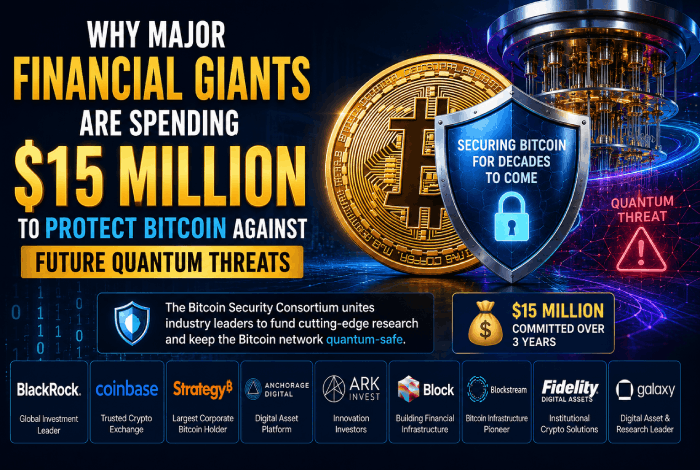
Quantum Computing: The Looming Threat to Current Cryptography
Quantum computers exploit the principles of quantum mechanics to solve certain mathematical problems far faster than classical computers. In the realm of cryptography, this means that algorithms once thought unbreakable could become vulnerable. The most notable example is RSA encryption, which relies on the difficulty of factoring large numbers—a task that quantum computers could perform efficiently with Shor’s algorithm.
The impact on blockchain security is profound. Many blockchain networks use elliptic curve cryptography for digital signatures. If a sufficiently powerful quantum computer emerges, it could theoretically derive a private key from its corresponding public key, allowing an attacker to sign transactions on behalf of the legitimate owner.
Coates acknowledges that the exact timeline for a “quantum day†remains uncertain. “We do not know when the day will arrive, but the preparation is clear,†he says. “We need to adopt post‑quantum algorithms that can resist attacks from quantum adversaries.â€
Post‑quantum cryptography (PQC) encompasses a family of algorithms designed to be secure against both classical and quantum computers. Organizations like the Solana Foundation are already researching and implementing PQC schemes, balancing security with performance considerations.
Trade‑offs Between Security and Speed
Transitioning to post‑quantum algorithms often introduces additional computational overhead. In a blockchain environment where thousands of nodes must agree on each transaction, even a modest increase in processing time can affect throughput and user experience.
Coates points out that Solana, for instance, must weigh the benefits of quantum readiness against the network’s hallmark speed—thousands of transactions per second. The foundation’s strategy involves incremental adoption, testing new algorithms in sandbox environments, and measuring their impact on block times and gas costs. The goal is to integrate PQC in a way that does not compromise the network’s core value proposition.
For users, the transition may mean updating wallets and software to support new cryptographic standards. While this adds a short‑term inconvenience, it prevents a far more disruptive breach in the future.
Building Security by Default: A Paradigm Shift
Coates stresses that the industry’s long‑term success hinges on making security the default setting for users, not an optional extra that requires expertise to enable. This mindset shift means designing products and protocols with the assumption that users will make mistakes, fall for scams, or have their credentials compromised at some point.
Consider a simple example: a crypto wallet that automatically flags suspicious outgoing transactions and requires a second approval from a trusted device before execution. If a user clicks a phishing link and enters their password, the wallet’s security layer still blocks the transfer unless the second approval is granted. This approach reduces reliance on the user’s ability to detect sophisticated scams.
Another component of default security is the use of hierarchical deterministic (HD) wallets. An HD wallet generates a tree of key pairs from a single seed phrase, enabling users to create new addresses without exposing the master key. This not only improves privacy but also limits the damage if a single address is compromised.
By embedding these protective measures into the core architecture, developers can ensure that even inexperienced users benefit from robust security without needing to become security experts themselves.
Case Studies: Real‑World Impacts of Advanced Threats
The theoretical discussion of security layers becomes concrete when looking at actual incidents. Several high‑profile breaches in recent months illustrate the progression from simple phishing to AI‑enhanced deception.
In early 2024, a decentralized finance (DeFi) protocol suffered a loss of over $50 million when an attacker obtained a private key through a compromised employee email. The attacker then drained liquidity pools, demonstrating how a single operational lapse can cascade into a massive financial hit.
Another incident involved a crypto exchange that fell victim to a deepfake video scam. The attacker impersonated the exchange’s CEO in a video call, convincing a junior accountant to transfer $12 million to an offshore account. The deepfake was so realistic that the exchange’s internal audit system did not flag the request, highlighting the need for multiple verification layers.
These examples underscore the importance of continuous education, regular security audits, and the implementation of advanced detection technologies. They also show that attackers are constantly adapting, using AI and sophisticated social engineering to bypass traditional defenses.
Learning from Mistakes: Post‑Incident Reviews
After each breach, organizations conduct post‑incident reviews to understand what failed and why. These reviews typically cover technical vulnerabilities, procedural gaps, and human factors.
Common findings include:
- Lack of multi‑factor authentication for privileged accounts.
- Insufficient training on recognizing deepfake or synthetic voice attacks.
- Delayed detection due to limited monitoring of cross‑platform communications.
By documenting these lessons and incorporating them into updated security policies, organizations can gradually reduce the likelihood of repeat incidents.
Future Outlook: Preparing for the Next Generation of Threats
As AI continues to evolve, attackers will have increasingly powerful tools at their disposal. The same technology that can detect fraudulent transactions can also be weaponized to create more convincing scams. This arms race means that security professionals must stay ahead of the curve.
One promising direction is the development of decentralized identity (DID) solutions. DIDs allow users to prove their identity without revealing unnecessary personal data, reducing the risk of credential theft. Additionally, zero‑knowledge proofs can enable verification of transactions without exposing sensitive details, adding a layer of privacy that also strengthens security.
Another emerging area is the integration of hardware security modules (HSMs) into wallet software. HSMs provide a tamper‑resistant environment for key generation and storage, making it significantly harder for malware to extract private keys.
Finally, industry collaboration is essential. Sharing threat intelligence, standardizing security protocols, and conducting joint penetration tests can create a more resilient ecosystem. The Solana Foundation’s engagement with other blockchain projects and regulators exemplifies this collaborative approach.
Conclusion: A Holistic Approach to Crypto Security
Blockchain technology offers unprecedented transparency and decentralization, but its security does not end at the code level. The rise of fake identities, AI‑generated scams, and quantum computing threats demonstrates that the most critical vulnerabilities often lie at the intersection of human behavior, operational procedures, and emerging technologies.
Michael Coates’ insights from both Web2 and Web3 environments highlight a clear path forward: adopt multi‑layered defenses, assume deception can succeed, and build security into the default user experience. By doing so, the crypto industry can protect users even when they make mistakes, ensuring that the promise of decentralized finance remains both innovative and trustworthy.
The journey toward robust security is continuous, requiring vigilance, education, and adaptation. As the threat landscape evolves, so too must the collective efforts of developers, enterprises, and individual users to create a resilient cryptographic ecosystem for the future.





Comments
You must be logged in to post a comment.
Login or Register