

Market Snapshot and Why It Matters
The cryptocurrency world opened Monday morning in Asia with Bitcoin trading above $64,000. This number represents the price of a single Bitcoin in U.S. dollars, much like the price tag on a new video game console. Although Bitcoin was up half a percent for the day, it fell nearly 3 percent over the past week, showing a sideways movement after recent volatility. A softer dollar and fading expectations of further Federal Reserve rate hikes have not been enough to push the price higher, leaving Bitcoin stuck in a narrow range.
Investors watch these price changes because Bitcoin is often called digital gold. Its value can affect the broader crypto market, and large movements can signal shifts in investor confidence. The fact that Bitcoin remained around $64,000 while other coins moved differently illustrates how each cryptocurrency can behave independently, even when they are part of the same ecosystem.
Bitcoin Basics Explained Simply
At its most basic level, Bitcoin is a form of digital money that exists only on computer networks. Unlike a physical coin, Bitcoin is created through a process called mining, where powerful computers solve complex puzzles to earn new coins. These coins are stored in digital wallets, which are like bank accounts but without a central bank. When you buy something with Bitcoin, you are transferring a record of ownership across the network, and this record is verified by many participants, making it hard to cheat.
The price of $64,000 per Bitcoin is the result of supply and demand. There are only 21 million Bitcoins ever to exist, so as more people want to own them, the price can rise. The recent sideways movement suggests that the number of buyers equals the number of sellers for now, creating a balance that keeps the price stable within a range.
Other Major Cryptocurrencies and Their Moves
Hyperliquid’s HYPE – The Weekly Winner
Hyperliquid’s token, HYPE, stood out by climbing more than 3 percent to about $59 and gaining almost 9 percent for the week. HYPE is a native token of the Hyperliquid platform, which focuses on decentralized trading. Its weekly gain makes it the only major token with meaningful upside, indicating that traders are particularly interested in this platform’s services. The platform offers features like perpetual contracts and low‑fee trading, which can attract users looking for flexibility.
To compare, think of HYPE as a loyalty point for a trading app. When the app improves its services, more users earn and spend those points, pushing the point’s value up. In this case, Hyperliquid’s unique offerings seem to be earning it extra attention from the market.
Ether – Climbing Slightly but Weekly Down
Ether, the native token of the Ethereum network, rose over 1 percent to just under $1,900, yet it is down 1 percent over the past seven days. Ether is often seen as a second‑generation crypto because it supports smart contracts—digital agreements that execute automatically when certain conditions are met. This capability makes Ether useful for building decentralized applications, ranging from games to financial services.
The modest gain suggests that investors are watching Ethereum’s development updates and the overall health of its ecosystem. Even a small movement in Ether can influence the mood of the broader market, as many projects rely on Ethereum’s blockchain.
Dogecoin – Small Gain, Low Price
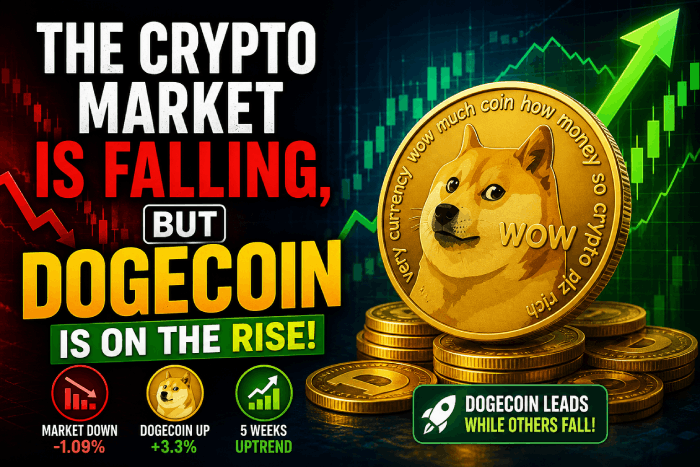
Dogecoin added nearly 1 percent to about 7 cents. Originally created as a joke, Dogecoin has built a dedicated community and is used for quick, low‑cost transactions. Its low price means you can buy thousands of Dogecoins with a small amount of money, similar to buying many small candy bars instead of one large one.
While the price change is minor, Dogecoin’s community-driven nature can cause sudden spikes when high‑profile figures mention it. The recent uptick may reflect growing confidence among its supporters, but the overall market sentiment remains cautious.
TRON – Minimal Change
TRON’s token moved under half a percent to just over 33 cents. TRON is a blockchain designed for entertainment and decentralized applications. It focuses on providing a platform for content creators to distribute media without intermediaries, much like a streaming service that cuts out the middleman.
The small movement indicates that TRON’s ecosystem is stable, but investors are waiting for new updates or partnerships to drive growth. The token’s price reflects a balance between existing users and new interest.
XRP – Slight Rise, Weekly Decline
XRP gained marginally to around $1, although it is down 3 percent for the week. XRP is the native token of the Ripple network, which aims to provide fast, low‑fee cross‑border payments for banks. Think of XRP as a digital bridge that helps money move instantly between different traditional currencies, reducing the need for multiple intermediate banks.
The weekly drop may be tied to regulatory concerns or slower adoption by financial institutions. However, the slight daily gain shows that some market participants still see value in Ripple’s technology.
Solana – Small Edge, Weekly Loss
Solana edged up to just over $75, yet it is down almost 2 percent over seven days. Solana is known for its high speed and low transaction costs, making it attractive for decentralized finance (DeFi) and non‑fungible token (NFT) platforms. Its speed is often compared to a fast lane on a highway, allowing many transactions to flow quickly.
The recent price action suggests that while developers appreciate Solana’s performance, market conditions are challenging. Investors are watching for network upgrades and partnerships that could revive interest.
BNB – Minimal Change, Flat Week
BNB slipped marginally to just over $604, staying flat for the week. BNB is the native token of the Binance ecosystem, which includes a cryptocurrency exchange, a blockchain, and various financial services. BNB is used to pay fees on the platform, similar to a discount coupon that reduces transaction costs for regular users.
The lack of movement indicates that traders are uncertain about Binance’s future regulatory environment and overall market direction. The token’s stability may be a sign of confidence in the platform’s core utility, even when price action is muted.
Macroeconomic Factors Influencing Crypto
Currency markets play a crucial role in crypto price dynamics. A Bloomberg gauge measuring the U.S. dollar slipped 0.1 percent, moving toward a third consecutive decline and levels last seen in May. When the dollar weakens, assets priced in dollars, such as Bitcoin, can become more attractive to holders of other currencies, potentially driving demand up.
Simultaneously, the MSCI emerging‑market currency index hit an intraday record, led by the Taiwanese dollar and Thai baht. Strong emerging‑market currencies can indicate confidence in global economic growth, which may translate into higher risk appetite for cryptocurrencies.
Retail Sales Data and Consumer Behavior
U.S. retail sales figures released on Friday showed the sharpest monthly drop in more than a year, as consumers pulled back on spending. Retail sales are a key indicator of how much ordinary people are buying, ranging from clothing to electronics. When retail sales fall, it can signal that households are tightening budgets, which may reduce the amount of money available for speculative investments like crypto.
Traders interpret this data as a sign of potential slower economic growth, which can affect the Federal Reserve’s policy decisions. If consumers are spending less, the Fed may be less inclined to raise interest rates aggressively, a factor that can influence crypto markets.
Federal Reserve Rate Expectations
Swaps traders now place the probability of a Federal Reserve rate increase next month at around one in four, down from about 50 percent a week earlier. A rate hike makes borrowing more expensive, which can reduce investment in riskier assets like cryptocurrencies. Conversely, lower rate expectations can free up capital for speculative investments, potentially boosting crypto prices.
Treasuries rose across the yield curve, reflecting a shift in investor sentiment toward safer assets. This movement shows that many market participants are cautious, preferring the stability of government bonds over the volatility of crypto.
Institutional Flow and Regulatory Signals
Nick Ruck, director of LVRG Research, noted that the market remains stalled near $63,000, with fading exchange‑traded fund (ETF) inflows showing a lack of optimism after last week’s selloff. ETFs are investment vehicles that allow many people to invest in a basket of assets, such as a crypto index fund. When large amounts of money flow out of these funds, it can signal that institutional investors are losing confidence, putting downward pressure on prices.
Looking ahead, two key events are likely to provide clearer guidance. The Federal Open Market Committee (FOMC) minutes from the July 28‑29 meeting are scheduled for release on Wednesday at 2 p.m. ET. These minutes detail how close the committee came to raising rates before last week’s data shifted expectations. Additionally, the anticipated White House crypto meeting could introduce new regulatory clarity, affecting how the market perceives future rules.
Regulatory news often dictates short‑term price movements because investors must anticipate how new rules could impact the legality, taxation, or operation of crypto projects. The combination of Fed minutes and a potential high‑level policy discussion creates a focal point for traders assembling their positions.
Zcash’s Tachyon Upgrade: What It Aims to Achieve
Zcash announced its Tachyon upgrade, a comprehensive set of improvements targeting shielded payments, quantum readiness, and governance resilience. The upgrade focuses on scaling shielded transactions, which are designed to keep transaction amounts and recipient details private, similar to how a sealed envelope hides its contents. By enhancing these shielded features, Zcash hopes to make privacy more practical for everyday use without sacrificing network performance.
Quantum readiness refers to preparing the protocol to resist future attacks from quantum computers. Quantum computers have the potential to solve certain mathematical problems much faster than conventional computers. To stay ahead, Zcash is incorporating cryptographic methods that are believed to be resistant to quantum attacks, ensuring that user funds remain secure even as computing technology advances.
Funding, Security, and Governance Tests
Beyond technical upgrades, Tachyon aims to test whether Zcash’s funding model, security framework, and governance structures can hold under real‑world conditions. Funding is the process of acquiring resources for ongoing development, often through a combination of grants, community contributions, and token sales. A robust funding model ensures that the project can continue improving without sudden shortfalls.
Security tests involve stress‑testing the network against various attack vectors, from 51% attacks to transaction malleability exploits. Governance tests evaluate how the community makes decisions on protocol changes, upgrades, and dispute resolution. Both aspects are critical because a blockchain’s long‑term success depends not only on its code but also on how its participants coordinate and adapt.
Why the Upgrade Matters to Users
For everyday users, Tachyon promises faster, more private transactions without a noticeable increase in fees. Imagine sending money to a friend without revealing how much you sent, yet the transaction is confirmed quickly—similar to using a prepaid card that hides the exact balance from the merchant while still allowing smooth purchases.
Developers and node operators will also benefit from clearer governance rules, reducing uncertainty about future upgrades. When users trust that a project’s leadership is transparent and the community has a say, they are more likely to adopt and hold the associated tokens.
Putting It All Together: The Bigger Picture
Today’s crypto landscape is shaped by a mixture of market dynamics, macroeconomic forces, institutional flows, and technical innovations. Bitcoin’s price hovering around $64,000 reflects a market that is waiting for clearer signals from regulators and central banks. Meanwhile, a handful of tokens like HYPE are gaining traction, showing that niche platforms can still outperform the broader market.
Macroeconomic indicators such as the dollar’s strength, retail sales data, and Federal Reserve rate expectations provide context for why investors might shift money between traditional assets and cryptocurrencies. The upcoming FOMC minutes and White House crypto meeting will likely serve as catalysts that could either reinforce current trends or trigger new moves.
On the technical side, upgrades like Zcash’s Tachyon demonstrate how blockchain projects evolve to meet modern challenges, including privacy, quantum threats, and community governance. These improvements not only enhance the utility of individual projects but also contribute to the overall credibility and sustainability of the crypto ecosystem.
As you consider your own exposure to digital assets, remember that each token serves a different purpose. Bitcoin often acts as a store of value, similar to gold. Ether supports a vast array of decentralized applications, while tokens like BNB provide discounts on specific platforms. Understanding these distinctions helps you align your investment choices with your goals and risk tolerance.
Finally, the crypto world continues to mature. Advances in privacy, security, and governance are gradually making digital assets more reliable and accessible. By staying informed about market movements, regulatory developments, and technological upgrades, you position yourself to navigate this evolving landscape with greater confidence.
Key Takeaways for Any Curious Learner
1. Prices reflect supply and demand; a sideways move means buyers and sellers are roughly equal for now.
2. Different cryptocurrencies have distinct uses—Bitcoin for value storage, Ether for smart contracts, BNB for platform fees, etc.
3. Macro factors like the dollar’s strength, consumer spending, and central bank policies heavily influence crypto markets.
4. Institutional money, such as ETF flows, can push prices up or down based on confidence.
5. Upcoming regulatory news and technical upgrades (e.g., Zcash’s Tachyon) can create new opportunities or risks.
6. Privacy, security, and governance improvements are essential for long‑term adoption and trust.
By keeping these concepts in mind, you can approach crypto discussions with a clearer perspective, whether you are simply observing market headlines or considering participation in the digital asset space.
Further Reading and Resources
For those who want to dive deeper, consider exploring the official documentation of Bitcoin, Ethereum, and Zcash. Online courses on blockchain fundamentals can provide step‑by‑step explanations of mining, smart contracts, and consensus mechanisms. Additionally, reputable financial news sites often publish analysis on macroeconomic indicators and their impact on cryptocurrency prices, offering valuable context for future market movements.
Remember, the crypto world evolves quickly, and continuous learning is the best strategy for staying informed and making thoughtful decisions.

Comments
You must be logged in to post a comment.
Login or Register