

Introduction: A Global Spotlight on Crypto Regulation
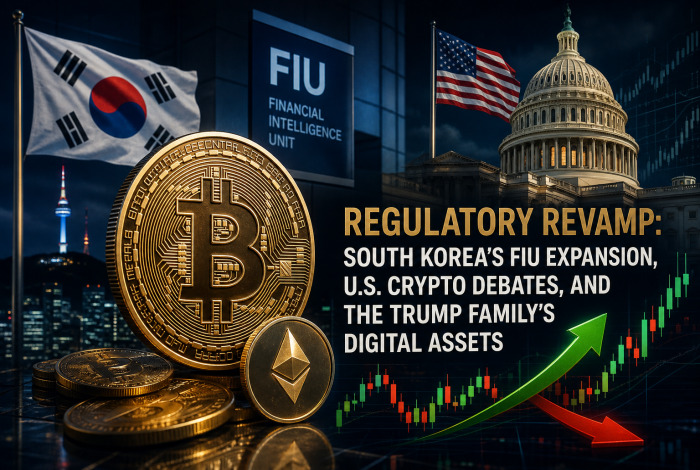
The world of digital finance is moving at a rapid pace, and governments are scrambling to adjust the rulebook. Recent headlines illustrate two parallel developments. In South Korea, lawmakers are pushing to give the country’s Financial Intelligence Unit (FIU) broader authority over crypto firms that currently operate without registration. Across the Atlantic, a new poll shows strong partisan division in the United States over whether President Donald Trump and his family should profit from cryptocurrency while serving in office. Together, these stories highlight a growing debate about how to bring transparency, consumer protection, and accountability to the crypto space.
To make sense of these events, we need to understand what a crypto firm is, why registration matters, what an FIU does, and how political and ethical concerns intersect with digital assets. This article breaks down each of these topics in clear, step‑by‑step language, using everyday analogies to help you picture complex ideas.
What Is a Crypto Firm and Why Registration Matters
A crypto firm is a business that deals with digital currencies, tokens, or blockchain‑based services. Think of it as a specialized bank that handles money that exists only as computer code rather than paper. Such firms can offer services like buying and selling Bitcoin, providing wallet storage, issuing new tokens, or running decentralized finance platforms.
When a crypto firm registers with a regulatory authority, it means the firm has gone through a formal approval process. During registration, regulators verify the firm’s identity, its internal controls, and its compliance procedures. This is similar to how a traditional bank must obtain a banking license before it can accept deposits. Registration typically imposes requirements such as anti‑money‑laundering (AML) checks, know‑your‑customer (KYC) protocols, and regular reporting.
Unregistered firms operate without this official seal of approval. For consumers, an unregistered crypto firm can be a black box: you may not know whether the firm follows safety standards, whether it can be trusted with your funds, or whether it is subject to oversight if something goes wrong. In many jurisdictions, operating without registration is illegal because it bypasses the safeguards designed to protect investors and to prevent criminal activity.
Consider a simple analogy: imagine a street vendor selling fruit without a health permit. The vendor may provide good fruit, but without inspection, you have no guarantee that the stall follows cleanliness rules. Likewise, a crypto firm without registration may be functional, but it lacks the regulatory “health inspection” that ensures it meets industry standards.
The Financial Intelligence Unit: Watchdog of Suspicious Activity
A Financial Intelligence Unit (FIU) is a government agency that collects, analyzes, and disseminates information about financial activities that may be linked to crime, such as money laundering or terrorism financing. The FIU acts as an early‑warning system, flagging unusual patterns for further investigation by law‑enforcement or regulatory bodies.
In most countries, the FIU works behind the scenes. It receives reports from banks, lawyers, and other financial firms when they notice suspicious transactions. For example, if a company suddenly receives a large deposit from an unknown source, the financial institution must file a report with the FIU. The FIU then examines the data, looking for red flags like round numbers, rapid movements between accounts, or connections to high‑risk jurisdictions.
Because crypto transactions can be conducted across borders instantly, they can be attractive to illicit actors. This is why many FIUs are eager to extend their oversight to crypto firms. By requiring crypto firms to report suspicious activity, the FIU can monitor the flow of digital assets, shut down illegal operations, and help preserve the integrity of the broader financial system.
To illustrate, think of the FIU as a customs officer at an airport. The customs officer looks at travelers’ luggage, checking for prohibited items. Extending that role to digital cargo (cryptocurrency) allows the officer to examine electronic shipments that might otherwise slip through unnoticed.
Typical Powers of an FIU
FIUs usually have several key powers:
- Data Collection: Require financial institutions, including crypto firms, to submit transaction reports and customer information.
- Investigative Authority: Request additional documentation or clarifications from regulated entities.
- Sanctions: Impose temporary freezes on assets suspected of being involved in illegal activities.
- Information Sharing: Collaborate with foreign FIUs and law‑enforcement agencies to track cross‑border flows.
Expanding FIU powers typically means granting them the ability to directly regulate or supervise crypto firms, not just receive reports. This could include the authority to audit crypto exchanges, enforce licensing requirements, and issue penalties for non‑compliance.
South Korea’s Legislative Push for Stronger FIU Authority
In recent weeks, South Korean legislators have introduced bills aimed at widening the FIU’s reach over crypto firms that currently operate without formal registration. The proposed changes are framed as a response to the rapid growth of digital asset markets and the need to protect investors from potential fraud.
One key component of the new legislation would require any platform that facilitates the buying, selling, or trading of cryptocurrencies to obtain a license from the FIU within a specified timeframe. Currently, some crypto businesses fall under an exemption that allows them to operate provisionally while awaiting registration decisions. The new rules would eliminate that provisional status, forcing these firms to meet stricter compliance standards before they can serve customers.
Another aspect of the proposal is to grant the FIU the power to conduct on‑site inspections and to levy substantial fines for violations. This mirrors approaches taken in other jurisdictions where regulators have moved from a light‑touch, self‑regulatory model to a more hands‑on oversight regime. The goal is to create a clearer legal environment that reduces uncertainty for both market participants and regulators.
Why is this important? When crypto firms are unregistered, it is difficult for authorities to track illicit flows or intervene when a platform fails. By expanding the FIU’s authority, South Korea aims to close these gaps, ensuring that digital asset services are held to the same anti‑money‑laundering standards as traditional banks.
The proposed legislation also emphasizes consumer protection. Registered firms must implement robust know‑your‑customer procedures, which help verify the identity of users. This reduces the risk of fraud, as criminals often exploit anonymous platforms to launder money. In practical terms, a consumer would have greater confidence that their funds are stored safely if the platform is regulated and monitored by the FIU.
U.S. Public Opinion on Trump’s Crypto Investments
While South Korea debates tighter controls, the United States is wrestling with a different set of concerns: the appropriateness of a sitting president’s family profiting from cryptocurrency. A recent Reuters/Ipsos poll of 1,166 Americans reveals a deep partisan split.
The survey asked respondents whether it was “appropriate” for President Donald Trump and his family to earn money from crypto investments while he holds office. Overall, 63% of participants answered “no,” indicating that a clear majority views such earnings as unsuitable. However, the breakdown by political affiliation is striking: 69% of Republicans said it was appropriate, while 92% of Democrats said it was not.
Why does this matter? The perception of conflict of interest can undermine public trust in government. When a president’s family members are financially tied to a fast‑growing industry like crypto, questions arise about whether policy decisions will favor private gain over the public interest.
The poll also reveals a broader cultural divide regarding the role of digital assets in the economy. Republicans, traditionally more skeptical of financial regulation, may see crypto as an opportunity for innovation and personal investment. Democrats, often more focused on consumer protection and ethical governance, may be more concerned about transparency and the potential for undisclosed influence.
To put this in perspective, imagine a school where a teacher’s child runs a lemonade stand that competes with students’ own stands. Some parents might think it’s fine (the teacher’s child is just another entrepreneur), while others might worry that the teacher’s position could give the stand an unfair advantage. The same dynamic plays out in government when family members are involved in lucrative industries.
The Trump Family’s Crypto Ventures
Among the Trump family’s crypto activities, two stand out: World Liberty Financial and the Official Trump (TRUMP) memecoin.
World Liberty Financial is described as a digital asset platform that aims to provide financial services built on blockchain technology. According to public filings and media reports, the company has pursued a trust charter, which is a regulatory pathway that allows certain financial entities to operate with a higher degree of oversight. In June 2025, the Office of Government Ethics disclosed that Trump had earned $1.4 billion from investments linked to crypto, with a notable portion tied to his involvement with World Liberty Financial and the memecoin.
A memecoin is a type of cryptocurrency created for humor, publicity, or speculation rather than for practical utility. The Official Trump token follows this pattern, leveraging the former president’s brand to attract investors. Such tokens often have limited technical function and can be highly volatile, with prices driven more by social media buzz than by fundamental technology.
The financial disclosures have sparked intense scrutiny. Critics argue that the vast earnings create a clear conflict of interest, as the president’s policy decisions could directly affect the crypto market’s regulatory environment, potentially benefiting his family’s enterprises. Supporters, however, maintain that private investment in legal enterprises does not inherently constitute misconduct, especially when there are no direct contractual ties between the president’s official duties and the crypto firms.
To illustrate the scale, imagine a city official who owns a stake in a construction firm that bids for municipal contracts. If the official influences which contracts are awarded, there is a risk of favoritism. Similarly, the Trump family’s substantial crypto holdings raise questions about whether any policy actions taken by the administration could unintentionally favor those investments.
Conflict‑of‑Interest Concerns and Ethical Oversight
The U.S. Office of Government Ethics (OGE) is tasked with ensuring that federal employees, including the president, avoid situations where personal financial interests could conflict with official responsibilities. The OGE’s June report highlighted that Trump’s crypto earnings amounted to $1.4 billion, a figure that far exceeds typical asset disclosures for a president.
Conflict of interest in the crypto context can manifest in several ways. First, regulatory proposals such as the Digital Asset Market Clarity Act could directly affect the valuation of tokens that Trump’s family holds. If the legislation makes it easier for memecoins to be offered to retail investors, the Official Trump token might see a surge in price, directly benefiting the family’s wealth.
Second, the Trump family’s involvement in World Liberty Financial could be impacted by any changes to banking or trust charter regulations. A more favorable regulatory environment might allow the platform to expand rapidly, again increasing the family’s financial upside.
White House spokesperson Anna Kelly has repeatedly stated that there are “no conflicts of interest.” This response reflects a legal interpretation that the president’s official actions are not directly tied to the specific crypto ventures. However, the public and many lawmakers remain skeptical, especially given the magnitude of the financial interests involved.
Ethics rules often require divestiture or blind trusts to mitigate such conflicts. In Trump’s case, however, he has retained ownership of his businesses, a departure from previous presidential practices. This has intensified the debate over whether current ethical safeguards are sufficient for the novel challenges posed by digital assets.
Legislative Action: The Digital Asset Market Clarity Act
In July, Senate Minority Leader Chuck Schumer announced new legislation aimed at establishing clearer roles for U.S. regulatory agencies in overseeing digital assets. The bill, later referred to as the Digital Asset Market Clarity Act, seeks to create a comprehensive framework that defines responsibilities among the Securities and Exchange Commission (SEC), the Commodity Futures Trading Commission (CFTC), and other relevant bodies.
The legislation is designed to eliminate regulatory uncertainty that has plagued crypto firms. By delineating which agency has jurisdiction over specific types of tokens—whether they are considered securities, commodities, or something else—the bill intends to provide a more predictable environment for innovation and compliance.
One of the bill’s key provisions is the expectation that crypto platforms must register with the appropriate regulator, similar to how traditional broker‑dealers must register with the SEC. This registration would involve submitting detailed business plans, internal controls, and proof of capital adequacy, among other requirements.
The bill also proposes the establishment of a new interagency task force to monitor systemic risks associated with digital assets. This task force could coordinate information sharing between the Treasury, the Federal Reserve, and the FIU‑equivalent agencies, ensuring that any emerging threats are addressed promptly.
Senators supporting the measure argue that a clear regulatory roadmap will protect investors while fostering technological advancement. By setting standards early, the United States can avoid the pitfalls experienced by other jurisdictions where regulatory vacuums allowed fraudulent schemes to flourish.
Opponents, however, caution that overly prescriptive rules could stifle innovation. They point to the rapid evolution of blockchain technology and argue that rigid frameworks might become outdated quickly, forcing companies to spend excessive resources on compliance rather than product development.
The bill is currently scheduled for a cloture vote on September 15, indicating that a final decision on its passage is imminent. A cloture vote is a procedural motion used to end debate and move to a final tally, suggesting that there is sufficient support to bring the legislation to the Senate floor for a definitive vote.
Comparative Perspectives: South Korea vs. United States
The contrasting approaches of South Korea and the United States highlight two distinct regulatory philosophies.
South Korea’s proposed expansion of FIU powers reflects a more centralized, top‑down model. The government aims to grant a single agency comprehensive oversight of crypto firms, requiring them to obtain licenses and adhere to strict compliance standards. This approach prioritizes consumer protection and the prevention of illicit finance, often at the cost of slower market entry for new players.
The United States, by contrast, is leaning toward a multi‑agency, market‑oriented framework. The Digital Asset Market Clarity Act seeks to allocate responsibilities among existing regulators, preserving a degree of competition among agencies while attempting to reduce regulatory overlap. This model is intended to encourage innovation by providing clear guidelines without imposing a single, monolithic authority.
Each approach has pros and cons. Centralized oversight can enforce uniform standards, but may be less adaptable to rapid technological change. A multi‑agency system can be more flexible, but may suffer from jurisdictional disputes and gaps in enforcement.
South Korea’s push for stronger FIU authority could serve as a case study for other nations considering similar measures. Meanwhile, the U.S. legislative effort offers a glimpse into how a large, established regulatory ecosystem might evolve to accommodate digital assets.
Potential Consequences for Investors and the Industry
Whether the South Korean FIU expansion passes or the U.S. Digital Asset Market Clarity Act becomes law, the ripple effects could be significant.
For investors, increased regulation typically means more transparency and fewer fraudulent schemes. Registered crypto firms must disclose key information about their operations, financial health, and governance structures. This allows investors to make more informed decisions, similar to how shareholders in a publicly listed company rely on annual reports and regulatory filings.
However, stricter rules may also limit investment opportunities. Some crypto projects that thrive on minimal oversight could find themselves unable to meet new licensing requirements, leading to market consolidation around larger, well‑capitalized firms. Smaller innovators might struggle to survive, potentially reducing competition and limiting the range of available services.
On the industry side, compliance costs will likely rise. Crypto exchanges and platform providers will need to invest in robust AML/KYC systems, internal audits, and legal counsel familiar with evolving regulations. These costs could be passed on to users through higher fees, affecting the accessibility of digital assets for retail investors.
Moreover, the regulatory clarity introduced by the Digital Asset Market Clarity Act could attract institutional investors who have previously shied away from crypto due to legal uncertainty. Institutional capital often brings stability and liquidity to markets, but it may also shift the focus of crypto firms toward products that align with traditional finance, possibly reducing the novelty that initially drove interest in decentralized applications.
Finally, the political backdrop cannot be ignored. If public opinion continues to view presidential crypto investments as problematic, future administrations may adopt even stricter ethical rules, potentially limiting the ability of political figures to hold interests in the sector. Conversely, if the industry demonstrates strong self‑regulation and consumer protection, the political pressure for tighter controls may ease, allowing for a more balanced regulatory environment.
Conclusion: Shaping the Future of Digital Finance
The current moment is a crossroads for cryptocurrency regulation worldwide. South Korea’s lawmakers are seeking to empower their Financial Intelligence Unit to oversee previously unregistered crypto firms, aiming to protect consumers and curb illicit activity. In the United States, a partisan divide over the Trump family’s crypto earnings reflects broader concerns about conflict of interest and ethical governance, while legislators work on the Digital Asset Market Clarity Act to provide a clearer regulatory roadmap.
Understanding these developments requires grasping the fundamentals of what crypto firms are, why registration matters, and what FIUs do. It also demands a look at the political dynamics that shape policy decisions and the potential impacts on investors and the industry.
As digital assets continue to evolve, the balance between innovation and oversight will remain a central challenge. Whether the regulatory approaches taken by South Korea and the United States succeed will depend on their ability to protect the public while fostering the technological breakthroughs that have made cryptocurrency one of the most talked‑about financial innovations of our time.
In the end, the conversation is not just about laws and political figures; it is about creating a financial landscape where digital money can be trusted, transparent, and accessible. The steps taken now will shape that landscape for years to come.




Comments
You must be logged in to post a comment.
Login or Register