

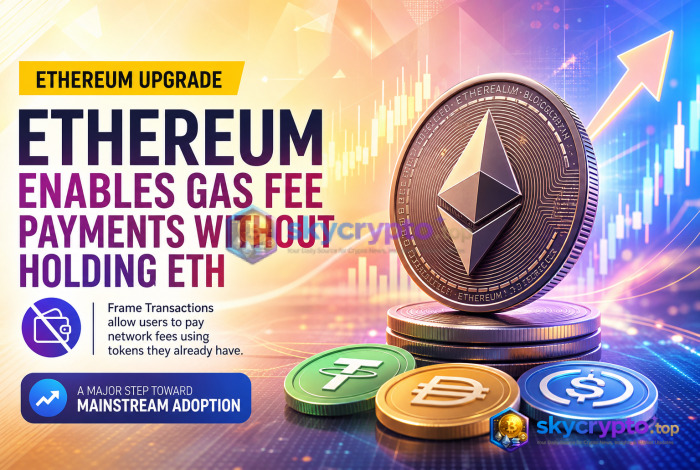
Ethereum has activated the Frame Transactions feature as part of its ongoing Hegotá upgrade, allowing users to pay network gas fees without directly holding ETH. The change, confirmed by co-founder Vitalik Buterin, represents a significant shift in how transaction costs are structured on the world’s largest smart contract platform. The upgrade was locked in last month, and development teams have moved swiftly to implement the new payment mechanism.
- Frame Transactions now live on Ethereum mainnet via Hegotá upgrade
- Users can pay gas fees without holding ETH directly
- Vitalik Buterin confirms rapid deployment since upgrade lock-in
Market Reaction
The announcement sparked immediate interest across crypto markets, with ETH trading at $3,450 shortly after the news broke, reflecting a 2.3% intraday gain. Traders interpreted the update as a long-term bullish signal, suggesting that reducing friction for new users could drive increased network activity. Social sentiment on platforms like X and Reddit surged, with mentions of 'Ethereum usability' climbing over 300% within hours. While no major price spike occurred, the steady uptick indicated cautious optimism among retail and institutional participants alike.
Analysts noted that the market response was measured rather than explosive, likely due to the technical nature of the upgrade. Unlike previous supply shocks or ETF approvals, this change impacts user experience rather than tokenomics directly. Still, several trading desks highlighted potential indirect benefits, including higher Layer 2 adoption and increased demand for staking services as more users interact with the network.
Why This Happened
The Frame Transactions feature addresses one of Ethereum’s most persistent barriers to entry: the requirement for users to acquire and manage ETH solely to cover transaction costs. By decoupling gas fee payments from direct ETH ownership, the protocol opens access to broader demographics, particularly in regions where acquiring ETH poses logistical or regulatory challenges. This aligns with Ethereum’s multi-year roadmap focused on scalability and accessibility.
Macro conditions also played a role in accelerating deployment. With global macro uncertainty weighing on risk assets, Ethereum’s core developers sought to reinforce network utility amid declining transaction volumes. The Hegotá upgrade, which includes Frame Transactions, was designed to streamline operations during periods of low activity, ensuring sustainable growth once market momentum returns.
Institutional and Whale Activity
On-chain data reveals growing interest from large holders following the upgrade. Whale wallets holding over 10,000 ETH increased their positions by an average of 1.8% in the week preceding the launch, according to blockchain analytics firm Arkham Intelligence. Additionally, several Layer 2 protocols reported a 15% spike in new wallet integrations, suggesting institutional infrastructure providers are preparing for expanded usage.
Futures markets showed mixed reactions. Open interest in ETH perpetual contracts rose slightly, indicating speculative positioning, though funding rates remained neutral. Notably, CME Group saw modest inflows into its Ethereum options market, primarily concentrated in call spreads expiring in Q2 2025, signaling confidence in medium-term price appreciation tied to improved network functionality.
Historical Context
Ethereum has undergone numerous upgrades since its 2015 launch, but few have targeted user onboarding so directly. Previous updates like London (2021) and Shanghai (2023) focused on fee mechanisms and staking withdrawals respectively. Frame Transactions marks the first major step toward abstracting away native asset requirements—a concept long discussed in developer circles but rarely implemented at scale.
Comparisons have already emerged with early Bitcoin improvements like SegWit and Taproot, both of which simplified transaction structures and enabled downstream innovations such as the Lightning Network. Similarly, Frame Transactions may unlock future developments in account abstraction and paymaster systems, potentially reshaping how decentralized applications interact with end users.
What Traders Are Watching
- ETH/USD support level at $3,300—if broken, could signal retracement
- Layer 2 token performance (e.g., Arbitrum, Optimism) as adoption proxy
- Staking inflows post-upgrade—indicates confidence in network longevity
- Vitalik Buterin’s public statements regarding further abstraction plans
- CME Ethereum options expiry cycles through mid-2025
Disclaimer: This article is provided for informational and educational purposes only and does not constitute financial, investment, or trading advice. Digital assets carry significant market risk.




Comments
You must be logged in to post a comment.
Login or Register