
Introduction: Why a 13‑Year‑Old Might Suddenly Hear About Falling Tech Stocks
Imagine you have a lemonade stand that you run every weekend. One week, out of nowhere, a huge rainstorm hits town, and suddenly lots of families stay home and buy bottled water instead of your lemonade. Your sales drop, and you have to think about whether to keep the stand open or take a break. The world of investing works a lot like that lemonade stand, but with computers, phones, and even money called cryptocurrency. Lately, many people have been talking about a big drop in the price of shares that are linked to two very popular ideas: artificial intelligence (AI) and Bitcoin mining. To understand why this is happening, we need to explore a few big ideas:
1. What is cryptocurrency and Bitcoin?
2. What does it mean to "mine" Bitcoin, and why do some miners also run AI data centers?
3. What are AI data centers, and why do investors love them?
4. How does the broader stock market (like the Nasdaq, the Fed, and the Korean market) affect these newer tech investments?
5. Why did everything fall together on Monday, July 13, 2024, and what can a curious teen learn from it?
We’ll go through each of these topics step by step, using everyday comparisons, simple numbers, and lots of examples. By the end, you’ll have a clear picture of how crypto, AI, and big‑company stock prices are all linked, even if it feels like they belong to different worlds.
1. Cryptocurrency and Bitcoin: The Digital Money That isn’t Printed by a Government
What Is Money, Really?
Before we talk about Bitcoin, let’s think about what money really is. Money is a tool that lets us trade things without having to use barter (trading a cow for a bicycle, for example). In modern life, most money exists as numbers in bank computers, not as paper bills. When you get paid for mowing a lawn, your employer sends a digital record to the bank that says “John earned $100.” That $100 can be used to buy snacks, video games, or saved for later.
Cryptocurrency takes this idea and puts it on the internet, but with a twist: there’s no central boss like a bank or a government. Instead, a whole network of computers around the world keeps track of who owns what. These computers work together to solve puzzles, and when they finish, they add a new "page" of transactions to the ledger. That ledger is called a blockchain. Think of it like a public notebook that everyone can see, but nobody can cheat because the notebook is protected by math.
Bitcoin: The First and Most Famous Crypto
Bitcoin was created in 2009 by a person (or group) using the name Satoshi Nakamoto. It was designed to be digital gold—an asset that people could buy, hold, and sometimes use to buy things online. Unlike real gold, Bitcoin isn’t heavy, but like gold, there will only ever be a limited amount of it: 21 million Bitcoin total. As of mid‑2024, about 19.5 million have already been "found" or "mined." The last Bitcoin won’t appear until sometime around the year 2140.
When you own Bitcoin, you own a piece of digital property that exists only as a record on the blockchain. You can send it to a friend just by typing an address (a long string of letters and numbers) and pressing send. The transaction is recorded instantly, and the network confirms it within minutes. No middle‑man, like a bank, is needed.
Why Do People Care About Bitcoin?
Some people think Bitcoin is like digital gold because it’s scarce and can hold value over time. Others see it as a way to send money quickly across borders without a bank taking a cut. Investors buy Bitcoin hoping its price goes up, just like they might buy shares of a company they think will grow. Of course, the price can also go down, and that’s part of the risk.
For our story today, the important thing is that Bitcoin needs something called "mining" to keep the network safe and to create new coins. Mining is also the activity that ties Bitcoin to AI data centers, which we’ll explore next.
2. Bitcoin Mining: Turning Electricity Into New Coins and Computing Power
What Does a Miner Actually Do?
Think of Bitcoin mining as a giant, global puzzle‑solving contest. Every time a Bitcoin is sent from one person to another, the network needs to make sure that transaction is legitimate. Miners compete to solve a complex math problem that requires a lot of computing power. The first miner to solve it gets two rewards: a bunch of newly created Bitcoins (the block reward) and the transaction fees from that block.
The math problem is called a hash function. It’s like trying to guess a secret number that is extremely hard to figure out, but easy to verify once you have a guess. Miners use specialized computers called ASICs (Application Specific Integrated Circuits) that are built just for this job. Each guess uses electricity, and the more guesses you make per second, the higher your chance of winning.
Why Do Miners Need So Much Electricity?
A mining machine works like a high‑performance video game graphics card, but it never rests. It runs 24 hours a day, 7 days a week, trying to solve the puzzle. Because the puzzle is difficult, the machines need a constant supply of power—often hundreds of kilowatts per mine. This is why Bitcoin mining facilities are usually built where electricity is cheap, like near hydroelectric dams or in places with low energy costs.
The cost of electricity is a huge factor for miners. When electricity prices go up, their profit margins shrink. When they go down, miners can stay profitable even if Bitcoin’s price stays the same.
From Mining to AI Data Centers: One Facility, Two Jobs
Now, imagine you have a huge warehouse full of powerful computers that are good at solving puzzles for Bitcoin. Those same computers can also be repurposed to train and run AI models. Training an AI model means feeding it huge amounts of data and adjusting its internal settings (weights) so it can do tasks like recognize images, translate languages, or suggest songs.
Running an AI workload is also very compute‑intensive. It needs lots of parallel processing, which modern GPUs (graphics processing units) and TPUs (tensor processing units) excel at. Some companies realized that the same hardware that can mine Bitcoin can also power AI inference (the act of using a trained model to answer queries) or fine‑tune new models.
Therefore, several Bitcoin mining companies also started building AI data centers. They take advantage of the same cheap electricity and high‑density computing infrastructure that made them successful in mining. Companies like MARA Holdings, Riot Platforms, CleanSpark, Iren, and Hut 8 have all announced plans to expand into AI services, hoping to earn revenue from both Bitcoin mining and AI workloads. This is why you often see their stock prices moving together with AI‑related tech stocks like Micron, SanDisk, Intel, and Marvell.
3. AI Data Centers: The “Brain Houses” of Modern Tech
What Exactly Is an AI Data Center?
A data center is a building that houses many computers and networking equipment. It provides power, cooling, and security so the computers can run nonstop. An AI data center is just a data center that’s optimized for the heavy computational tasks required by artificial intelligence.
Imagine you have a massive recipe book with millions of pictures of cats and dogs. To teach a computer to tell if a picture shows a cat or a dog, you need to feed that picture through the computer many times, adjusting its internal numbers each time. That process uses thousands of processors working together, and the data center must supply enough electricity and cooling to keep everything from overheating.
Why Do Investors Love AI Companies?
In recent years, AI has become a buzzword that promises huge returns. Companies that provide AI chips (like NVIDIA), AI software (like OpenAI’s ChatGPT), or AI services (like cloud providers offering AI inference) have seen their stock prices soar. Investors bet that AI will revolutionize everything from medicine to self‑driving cars, creating new markets and making old businesses more efficient.
When AI enthusiasm is high, investors pour money into any company that mentions AI in its earnings call. This includes traditional hardware makers like Intel and Micron, as well as newer players that can deliver AI performance. The expectation is that AI will drive revenue growth far beyond what the companies have achieved before.
Risks When Everyone Loves AI
All that excitement can also be a double‑edged sword. If AI adoption slows down, or if training an AI model proves more expensive than expected, the companies that built massive data centers might find themselves with idle hardware. Their profit margins could shrink, leading to a drop in stock price. This is what we saw in early July 2024, when a combination of global events made investors nervous, and the AI‑related stocks took a hit.
4. The Bigger Financial Picture: Why the Nasdaq, the Fed, and the Korean Market Matter
The Nasdaq: A Tech‑Heavy Index
The Nasdaq is a stock market index that includes many technology companies. Think of it like a basket of your favorite tech toys. When one toy becomes less exciting, the whole basket can wobble. On Monday, July 13, the Nasdaq was down about 1.5% just minutes before the close, not because of a single event but because many investors were feeling uneasy about the overall economic outlook.
Middle‑East Escalation: How a Far‑Away Conflict Affects Tech Stocks
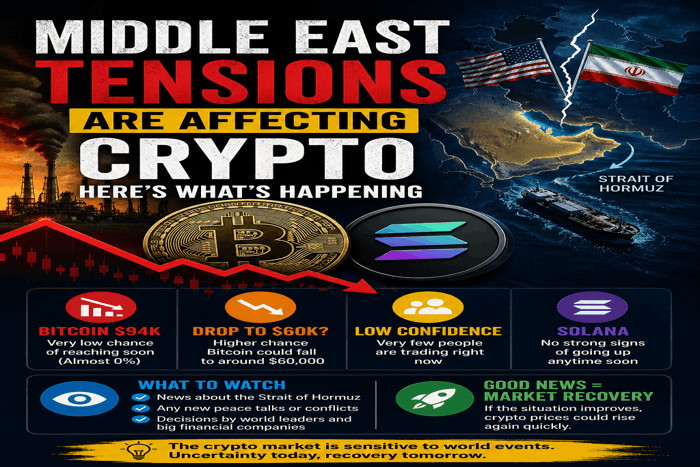
The Middle East has long been a region where political tension can quickly affect global markets. When news broke about an escalation (say, a war or a major diplomatic showdown), investors often become cautious. They may sell off assets that are seen as “risky,” like growth‑oriented tech stocks, and move their money into safer investments such as government bonds. This flight to safety can cause a quick drop in tech share prices, even if the tech companies themselves haven’t changed.
The Korean Market (Kospi) Plunge
South Korea’s Kospi is another important barometer for tech investors. On the same day, the Kospi dropped by about 9%, a massive decline. Korea is a huge exporter of semiconductors and display panels, essential components for AI chips and data centers. When the Korean market tumbles, it often signals trouble in the global supply chain for those components. If investors think there could be a shortage or higher costs for chips, they might shy away from companies that depend on those chips, including AI and Bitcoin miners.
The Federal Reserve’s Rate‑Hike Warning
The Federal Reserve (the Fed) is the central bank of the United States. It sets interest rates that influence how much it costs for companies and people to borrow money. When the Fed signals it may raise rates soon, borrowing becomes more expensive. Companies that need to finance big projects (like building new AI data centers or expanding mining operations) will think twice because higher interest payments reduce profits.
In July 2024, a Fed governor hinted that a rate hike could come as early as that month. The news sent ripples through markets because higher rates typically slow down economic growth, which can reduce demand for tech hardware and cloud services. Consequently, investors re‑priced tech stocks downward to reflect the higher cost of capital and slower future earnings.
Why All These Factors Converge
When you combine a geopolitical shock (Middle‑East tension), a major market drop in a key semiconductor exporter (Korea), and a central bank signal of tighter monetary policy (Fed), investors feel like the environment is becoming riskier. Tech stocks, which are often seen as “growth” investments, are the first to be sold off in such scenarios. This explains why the Nasdaq fell, why AI‑related names like Micron, SanDisk, Intel, and Marvell dropped even more sharply, and why Bitcoin miners that also run AI data centers saw similar declines.
5. The Real‑World Impact on Bitcoin Mining Companies
Which Companies Are Involved?
The article specifically mentions five Bitcoin miners that have diversified into AI data centers:
- MARA Holdings (MARA) – One of the largest publicly traded Bitcoin miners, MARA has invested heavily in building AI‑ready infrastructure.
- Riot Platforms (RIOT) – Known for its massive mining farms, Riot also aims to host AI workloads on the same hardware.
- CleanSpark (CLSK) – A newer miner that has focused on energy‑efficient mining and is expanding into AI services.
- Iren (IREN) – A Canadian mining firm that has been adding AI data center capacity to diversify revenue streams.
- Hut 8 (HUT) – Another U.S. miner that is repositioning its facilities to support both cryptocurrency mining and AI inference.
All five saw their stock prices fall about 5% on the day in question. This reflects investor concerns about the profitability of their dual‑use business model when the broader tech sector is under pressure.
Why a 5% Drop Matters
Even a small percentage drop can translate into millions of dollars in market value because these companies have market capitalizations in the billions. For example, if MARA is worth $2 billion, a 5% drop reduces its value by $100 million in minutes. That kind of movement signals that investors think the companies may have trouble meeting future earnings expectations.
What Does This Mean for a Young Investor?
If you were to buy a share of one of these companies, a 5% drop might feel scary, but it’s important to remember that stock prices go up and down all the time. The key is to understand why they’re moving. In this case, the decline isn’t because the miners suddenly became less capable of finding Bitcoin; it’s because investors are worried about the overall economic climate and the profitability of their AI ventures.
For a beginner, this illustrates a simple rule: the price of a stock often reflects expectations about future earnings, not just what’s happening today. If expectations change, the stock changes, sometimes dramatically.
6. Putting It All Together: A Simple Story for Everyone
Imagine the world’s financial markets as a giant playground where kids (investors) are playing different games. Some kids are building LEGO towers (AI data centers), hoping they’ll become the tallest buildings on the block. Others are mining for gold (Bitcoin mining) using special flashlights (ASICs). Sometimes, a thunderstorm rolls in (Middle‑East tensions, a Fed rate‑hike warning) and the whole playground becomes shaky. All the kids decide to hold onto their money a bit tighter, so they sell some of their LEGO sets and gold flashlights. That collective selling pressure makes the prices of LEGO sets (AI stocks) and gold flashlights (miner stocks) drop.
In our story today, the LEGO sets are Micron, SanDisk, Intel, and Marvell; the gold flashlights are MARA, RIOT, CLSK, IREN, and HUT. The playground’s shaking is caused by global events and economic signals, not by any single flaw in the toys themselves.
Understanding these connections helps you see why everything can feel linked, even if it seems unrelated. It also helps you ask better questions when you see news headlines about falling stock prices or cryptocurrencies. Are the fundamentals of the business changing? Is the overall economic environment becoming more risky? Or is it just a brief moment of investor nerves?
7. Takeaways for a Curious Teen
1. Crypto Is Digital Property That Needs Mining
Bitcoin isn’t printed by a government; it’s discovered by computers that solve puzzles. Mining is energy‑intensive and requires expensive hardware. That’s why electricity costs matter a lot to miners.
2. AI Data Centers Are Heavy‑Duty Computing Factories
Just like a factory that makes toys, an AI data center uses massive numbers of computers to train and run AI models. These centers need lots of power and cooling, which can be expensive.
3. Investors Get Excited About New Tech, But That Excitement Can Be Volatile
When a new technology (like AI) seems revolutionary, investors pour money into it. If something else (like a geopolitical crisis or higher interest rates) makes them nervous, they can quickly pull money out, causing prices to fall.
4. The Stock Market Is a Pulse of the Economy
The Nasdaq, Korean market, and Fed decisions are like different sensors that tell us how the economy is feeling. When they all point to trouble, even seemingly unrelated assets (like Bitcoin miners that also run AI centers) can feel the impact.
5. Always Look Behind the Headline
If you hear that a stock dropped 5%, ask yourself why. Was there bad news about the company’s product? Did investors worry about future earnings? Understanding the “why” is the key to smart investing, whether you’re buying LEGO sets, gold flashlights, or cryptocurrency.
Conclusion: The Interconnected Web of Modern Finance
The story of the July 13 drops isn’t just about Bitcoin or AI; it’s about how different parts of the global economy are woven together. Imagine a world where a storm in the Middle East can affect the price of a Korean chip exporter, which then worries investors about the profitability of AI data centers, which finally ripples into the share price of Bitcoin miners that have also entered the AI business. That’s the reality for today’s markets.
For a teenager who loves technology, gaming, and even music, this is a perfect moment to start learning how money moves around these world‑changing inventions. By breaking down the concepts into everyday analogies—like lemonade stands, LEGO towers, and gold‑mining flashlights—you can see that the jargon, while complex, is just a fancy way of describing human behavior: we all want to build something valuable, we all want to protect what we have, and we all get nervous when the ground beneath us feels shaky.
So keep asking questions, keep reading, and keep connecting the dots. The more you understand, the better equipped you’ll be to navigate the ups and downs of both the digital and financial worlds.
References for Further Reading (Optional)
- Bitcoin Whitepaper (Satoshi Nakamoto, 2009)
- SEC Filings for MARA, RIOT, CLSK, IREN, HUT
- Recent earnings calls of Intel, Micron, NVIDIA, and other AI chip makers
- Federal Reserve announcements and meeting minutes
Comments
You must be logged in to post a comment.
Login or Register